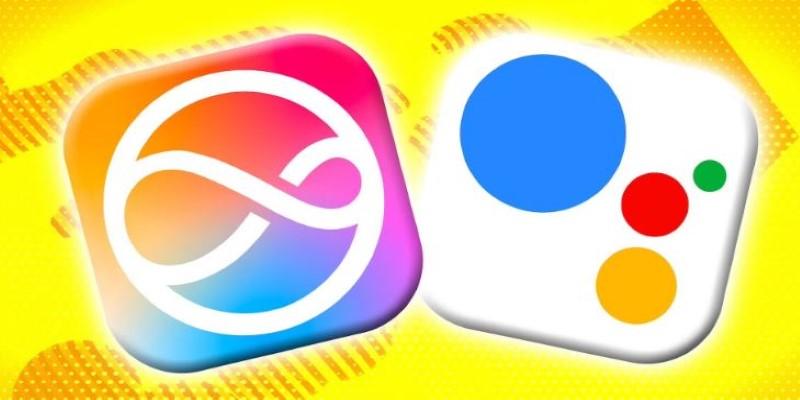
The smartphone landscape features two dominant voices: Siri, known for cool, collected efficiency, and Google Assistant, valued for vast conversational intelligence. Most users choose one based on their device, but this means accepting limitations. A smarter strategy, especially for power users, is to view them as complementary specialists, not rivals.
By balancing their unique strengths, Siri's deep iOS integration and Google's superior informational retrieval, you create a more comprehensive digital assistant experience and leverage the best of both worlds for a richer digital assistant life.
Tapping into Ecosystem Specialization
Siri’s primary edge isn't general knowledge; it's its unparalleled access to the core functions and data structures within Apple’s devices. This specialization solves the real-world problem of frictionless, secure system management. With Siri, you can say, "Hey Siri, what time is the reminder I set for the dry cleaning pickup tomorrow?" Because the request is processed securely on the device, the response is immediate and accurate to the local data. Managing Apple Music, sending a WhatsApp message through the integrated iOS API, or controlling HomeKit accessories are all areas where Siri wins on speed and deep system permissions.
The constraint here is Siri's closed-loop data access. If you ask for a summary of a highly niche historical event, it often defaults to a general web search result, lacking the sophisticated, synthesized summary Google provides. In contrast, Google Assistant's deep hooks into the Google ecosystem give it dominance in informational tasks. A user preparing for a trip could ask, "Hey Google, what are the current visa requirements for Canadian citizens traveling to Japan, and what's the average wait time at the Tokyo airport immigration?"
Google seamlessly draws upon multiple current web sources, providing a synthesized, conversational answer that Siri cannot match. The balance, therefore, is to use Siri for anything tied to the device state or local apps and Google Assistant for any task requiring external, current, or deep contextual information.
The Power of Routine and Shortcut Triggers
The most effective way to balance the two assistants without constantly changing your primary invocation phrase is to assign them different, non-overlapping domains of responsibility using automation. This is where Apple's Shortcuts app and Google's Routines feature become the bridge builders. The problem this workflow solves is the cognitive load of remembering which assistant is better for which query. By delegating tasks through triggers, you get the right tool every time.
A specific user scenario involves the morning routine. An iPhone user might set up a Shortcuts Automation to trigger when the morning alarm is dismissed. The Shortcut's steps might be: (1) Siri reads the local weather and calendar for the day (Siri's strength: local data). (2) The Shortcut then sends a command via a specific URL scheme to the Google Assistant app to activate a pre-set Google Routine. (3) The Google Routine then broadcasts "Time for the news" to all Google Home speakers and plays a specific podcast (Google's strength: broader media integration and smart speaker dominance).
The limitations here involve handoff friction; direct API integration between the two is non-existent. You have to rely on creative workarounds, such as using a URL schema, which can sometimes introduce a small but noticeable delay or a screen change. This structured delegation prevents the frustration of asking Siri a complex informational query or asking Google to manage a low-level iPhone setting.
Strategic Media and Smart Home Delegation
The two assistants have fundamentally different approaches to media playback and smart home control, and leveraging these differences is key to a robust setup. Google Assistant is the clear leader in smart speaker ubiquity and direct integration with third-party media services. A family utilizing Google Nest speakers throughout their home finds that asking, "Hey Google, play the jazz playlist on Spotify in the kitchen and living room," is a fast, reliable, and multi-room experience. Siri's HomePod support is excellent, but its media ecosystem remains more tightly controlled and less agnostic to services outside of Apple Music.
Conversely, Siri dominates private, on-the-go media control and home security actions. Using AirPods, a quick "Hey Siri, turn down the volume by 20 percent" is seamless and device-local. HomeKit's secure framework makes Siri the preferred platform for locking doors or disarming an alarm, running many commands locally for vital security resilience.
Delegate music streaming and broad entertainment to Google and lock/unlock actions, camera feeds, and secure, private media changes to Siri. While Google Assistant initiates broadcasts faster, Siri’s deep microphone access on the Apple Watch makes it the most convenient tool for quick, discreet commands in public.
Information Retrieval and Conversational Depth
The ultimate distinction lies in how they process and respond to queries. Siri excels at executing actions; it's less effective at sustained, contextual conversation. Google Assistant, fueled by its search engine, excels at the latter. If a user asks, "Who was the greatest singer of the United States?", both give an immediate, correct answer. The power disparity becomes clear in the follow-up. If the user then asks, "What year did his term end and who was his vice president?", Google Assistant understands the contextual pronouns and provides a coherent flow. Siri will often lose the thread, treating the request as a new question, forcing the user to rephrase.
Therefore, the final balancing act is defining the interaction's purpose. Use Siri for Transactional Commands: setting timers, placing calls, sending texts, and controlling device functions. Turn to Google Assistant for Informational and Exploratory Queries: complex logistics, asking for comparative data, or engaging in a multi-step research dialogue. By treating them as a Transaction Specialist (Siri) and an Information Specialist (Google), you stop fighting limitations and start capitalizing on their respective genius.
Conclusion
The future of digital assistance involves delegating tasks between specialists. Siri excels as the Transaction Specialist for device controls and secure HomeKit actions. Google Assistant acts as the Information Specialist for conversational depth and complex retrieval. Using Shortcuts and Routines to bridge the two ensures the right digital assistant handles the request, minimizing friction and optimizing your integrated digital life.