Airtable had been my go-to for a while. It sat somewhere between a spreadsheet and a database, which made it easy to bring others into my workflows without needing to explain too much. I'd set up content calendars, client portals, and lightweight CRMs. Everything worked well until it didn't. The trouble started when more people joined the mix. Airtable’s pricing tiers, while reasonable for solo use, scaled up quickly once collaborators came in.
Permissions weren’t flexible enough for what I needed. On top of that, automations started hitting limits, and integrations with internal tools got messy. So I started looking elsewhere—not for a total rewrite, just something that could sit on top of a database and be shaped the way I needed. That’s how I ended up replacing Airtable with NocoDB.
Why I Even Considered NocoDB?
NocoDB wasn’t on my radar for a long time. It doesn’t have the marketing polish of more commercial tools. But it does something simple and useful: it turns any SQL database into a no-code platform. That means I could plug it into a self-hosted PostgreSQL instance and get an Airtable-like UI, without migrating data to a new ecosystem or dealing with unpredictable pricing.
This setup let me keep control of my data, avoid hitting artificial record limits, and finally get around some of the permission headaches. More than that, I could tweak the backend directly if needed, which made a big difference when building more complex workflows.
It’s not a perfect swap, though. NocoDB expects a bit more from you technically. You’ll need to be comfortable running a Docker container or setting up Node.js on a server. And while the UI feels familiar, there are rough edges. Sorting and filtering aren’t always as intuitive. Some bulk actions require extra clicks or aren’t supported yet.
Still, once it was running, the flexibility made up for the onboarding friction.
How I Migrated an Active Client System?
One of the trickiest parts of the transition was moving a live client project tracker from Airtable to NocoDB. This wasn’t some archived system collecting dust—it was in constant use. Updates came in daily. Status changes, team notes, and a Friday export routine that had to be consistent. Disrupting that rhythm wasn’t an option.
I began by setting up a PostgreSQL schema that matched the Airtable layout. Airtable’s CSV export worked well enough, and I brought the tables into the new database using pgAdmin. The challenge came with re-creating relationships. Airtable simplifies things by hiding how tables connect. NocoDB, on the other hand, leans on foreign keys, so I had to rebuild the links between records more intentionally. That included mapping lookup fields and handling linked records in a way that made sense for SQL.
Once the structure was in place, I used NocoDB to create the user-facing views. Field-level permissions came in handy here. I could give different teams access to only the columns they needed, which avoided confusion and kept data clean. Airtable only made that possible on their higher-priced plans.
For the weekly reports, I wrote a small SQL script and set up a cron job. It took longer to configure, but the output was clean, consistent, and exactly how the client wanted it—no manual formatting required.
What Changed in My Workflow?
After the switch, the biggest difference was how much more transparent everything became. In Airtable, there’s always a sense that the system is doing more behind the scenes than it shows. That’s useful when you want to stay hands-off, but frustrating when something breaks, and there's no log to check or setting to toggle.
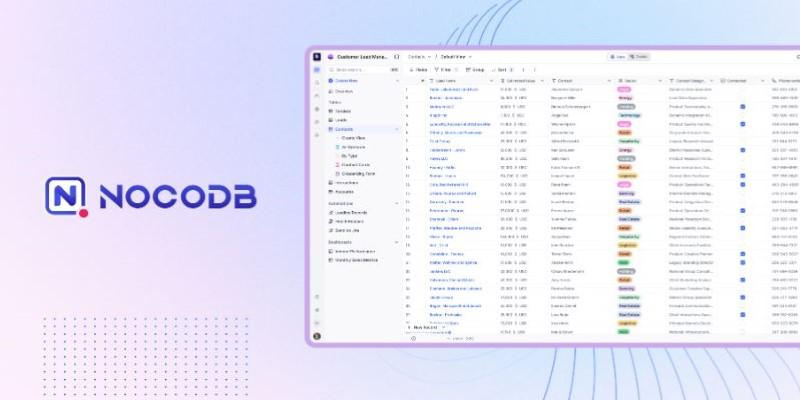
NocoDB brought things back into focus. I could see the database directly. If a view felt slow, I could check the query. If a user needed custom access, I could handle it through SQL roles. I didn’t need workarounds or support tickets.
That said, collaboration took a hit early on. The UI isn’t as polished. Some teammates found it harder to navigate. I had to spend time creating helper views and simple onboarding docs. But over time, they adjusted—especially once they saw that the system wasn’t going to change every few months or ask for more money just to add one more user.
Another benefit came from NocoDB’s API layer. Every table and view exposes a REST API by default. That meant integrating with internal dashboards and automating tasks was far cleaner than with Airtable, where rate limits or webhook oddities often got in the way.
Living With the Tradeoffs Day to Day
This wasn’t a fast switch. Airtable handles quirks in the background without much friction. It forgives missteps, shields you from structural mistakes, and makes collaborative work feel seamless. NocoDB doesn’t operate that way. It expects some understanding of database logic. If you create a flawed schema, it won't stop you. If you overcomplicate your joins, performance takes a hit.
The benefit is freedom. There’s no limit on record count unless you impose one. Permission structures don’t lock you into paid tiers. You get to decide what happens under the hood. But that freedom means you have to take ownership of the setup. If you're not comfortable configuring a database, it can feel brittle.
The UI isn't as polished. Some views require more steps to customize. Search works, but not always the way you’d hope. Still, these gaps are closing. Development is active, and the pace of fixes is noticeable. The quirks today aren’t guaranteed to still be there next quarter.
Final Thoughts
NocoDB isn’t for someone looking to replace Google Sheets with a prettier front-end. But if Airtable has started to feel like a walled garden with arbitrary limits, this might be the right exit. For my use case—managing client systems, custom views, and controlled access—it did more than just keep up. It opened up options. Once the technical groundwork was laid, the system stayed out of the way. There’s more effort up front, but less guessing later. That trade felt fair.