Most homes are lit like waiting rooms. You walk in, flip a switch, and a single overhead fixture floods the space with a static, harsh brightness that does not change regardless of the time or the task. It is a binary system in an analog world. The real value lies in reclaiming control over the atmosphere of a room and aligning artificial illumination with biological needs. It transforms a static house into a responsive environment that acknowledges the difference between a Tuesday morning workflow and a Friday evening dinner.
Aligning Color Temperature with Circadian Biology
The sun does not stay the same color all day. It shifts from a warm, orange glow at sunrise to a piercing, blue-white intensity at noon, and back to a deep amber at sunset. Our bodies evolved to interpret these shifts as timekeeping signals. Standard LED bulbs ignore this. They blast the same 3000K or 5000K light constantly. This confuses the brain's production of melatonin. It makes winding down at night difficult because the eyes are receiving a signal that says it is still midday.
Smart lights solve this by automating the Kelvin scale. A realistic setup involves programming the bulbs to shift their white balance imperceptibly throughout the day. In the morning, the light should sit around 5500K to 6500K. This cool, blue-rich light suppresses melatonin and promotes alertness. It works better than caffeine for many people. As the sun sets, the system should automatically slide down to 2700K or even 2200K. This warm, candlelight-esque hue signals the body to prepare for rest.
The implementation of this requires "set and forget" logic. Using a feature like Apple’s Adaptive Lighting or a scheduled routine in the Hue app removes the manual labor. The user does not need to open an app to change the color. The light simply is the correct color when the switch is pressed. This subtle background adjustment drastically reduces eye strain in the evening.
Defining Spaces in Open Floor Plans
Modern architecture loves open concepts. The kitchen bleeds into the living room, which bleeds into the dining area. This creates a spatial problem. When you are cooking, you need high-visibility task lighting to chop vegetables safely. When you sit down ten feet away to eat, that same stadium-level brightness is clinical and uninviting.

Smart bulbs allow for "zoning" without rewiring the house. You can group three pendant lights over the island as a "Kitchen" zone and the floor lamp by the armchair as a "Reading" zone. A realistic user scenario involves a "Dinner" scene. With one button press, the overhead kitchen lights turn off completely. The under-cabinet strips dim to ten percent to provide a soft glow for navigation. The dining table fixture adjusts to fifty percent brightness at a warm temperature.
This separation creates virtual walls. It tells the brain that the kitchen is closed. The mess on the counter disappears into the shadows while the table becomes the focal point. High Color Rendering Index (CRI) becomes critical here. Cheaper smart bulbs often have low CRI, meaning food looks gray or washed out. Investing in bulbs with a CRI above 90 ensures that the seared steak actually looks appetizing rather than medicinal.
Solving the "Middle of the Night" Blinding Problem
There is a specific, universal pain point: waking up at 3:00 AM to use the bathroom. In a standard home, you have two choices. Navigate in pitch blackness and risk stubbing a toe, or turn on the bathroom light and burn your retinas with full brightness. The shock of the sudden light wakes the brain up fully, making it difficult to fall back asleep.
Motion sensors paired with smart lights offer a preventative solution. The logic here is conditional. If motion is detected between 8:00 AM and 10:00 PM, the lights turn on to normal brightness. If motion is detected between 11:00 PM and 6:00 AM, the lights turn on to one percent brightness in a deep red or warm orange hue. Red light does not degrade night vision or interrupt melatonin production.
Placing a motion sensor at the ankle level in the hallway or under the bathroom vanity creates a path of light that triggers only when feet hit the floor. The user walks in, sees exactly what they need to see, and walks back to bed without their brain registering that the "day" has started. This specific automation often justifies the cost of the entire system for light sleepers or parents with young children.
The Connection Bottleneck and Hub Reliability
A common frustration for newcomers is the "No Response" error. You ask for the lights to turn off, and nothing happens. This usually occurs because of network congestion. Many entry-level bulbs connect directly to Wi-Fi. If you install thirty of them, your router struggles to manage the traffic alongside your laptop, phone, and television.
Reliability requires understanding the communication protocol. Zigbee and Thread are superior alternatives to Wi-Fi for lighting. These protocols create a mesh network. Bulb A talks to Bulb B, which talks to Bulb C, and finally to the hub. If Bulb A is too far from the hub, Bulb B acts as a repeater. This reduces the strain on the main Wi-Fi router.
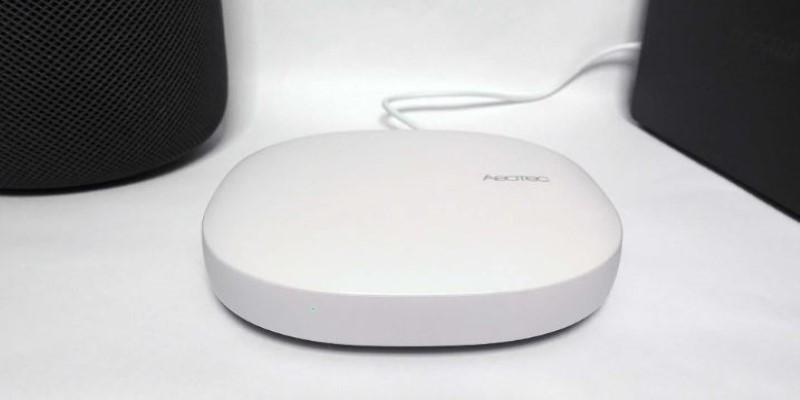
A user relying on Bluetooth-only bulbs will experience lag. It takes three seconds for the phone to connect to the bulb before the command works. That friction destroys the experience. A dedicated hub, like the one used by Philips Hue or an Aeotec hub for SmartThings, provides a local control layer. For anyone serious about outfitting more than one room, moving away from Wi-Fi bulbs to a hub-based system is the difference between a novelty toy and a reliable utility.
Final Verdict
We often think of lighting as a static utility. It is either on or off. Smart lights reveal that lighting is actually an active participant in our biology and our spatial perception. It is not about avoiding the light switch. It is about the light knowing what you need before you reach for the wall. When the house adjusts itself to support your sleep, define your work zones, and guide you in the dark, the technology fades into the background. It just feels like living in a better home.